
EHR — Practice management · Windows 10 and 11
Everything our EHR does for your clinic, in one window.
Patients, scheduling, visits, notes, files, forms, messaging, tasks, inventory and billing — one login, one record, one place. It runs on the computers you already own, and Blues runs there with it.
Try it free for two months Every feature, written down →
- From $50 a month. Per practice. Staff never count.
- Set up before your coffee lands. Nine short screens.
- No card to start. So there is nothing to cancel.
In three sentences
LogBlues runs your whole clinic in one program on the computers you already own, so your patient records stay in your office instead of somebody’s cloud. Scheduling, check-in, notes, files, tasks, messaging, inventory and billing are all in it, along with an assistant called Blues that drafts your notes and messages right there on the machine. One price covers the practice, the front desk is never counted, and the first two months are free with no card.
How it looks
Translucent, not flat.
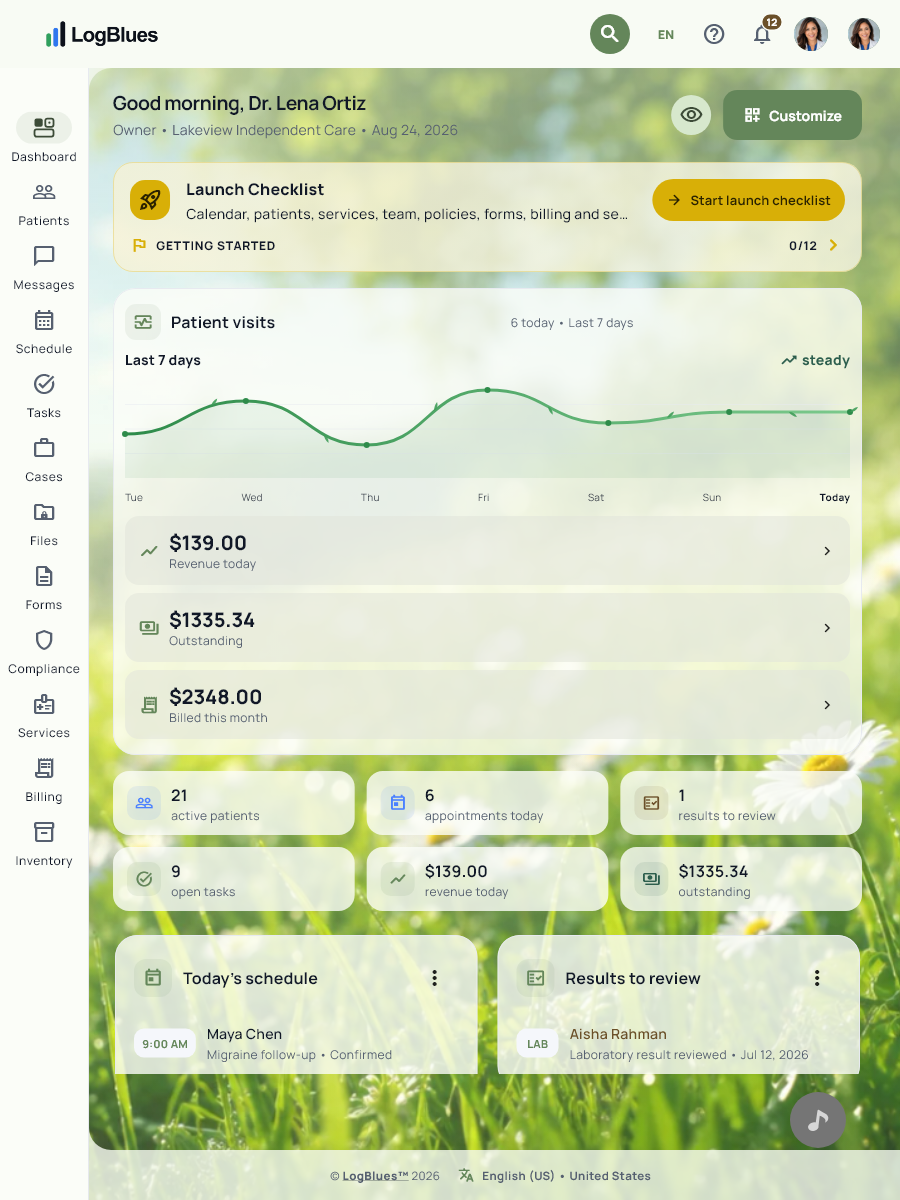
The panels float over the artwork rather than sitting in boxes on top of it, so a screen carrying a full clinical day still reads as one calm surface. Every screen is drawn by our own design team in a house style rather than assembled from a stock component set, which is why choosing a theme changes the mood of the software without moving a single control.
A day with it
Morning, through to the last patient.
Not a feature list. What the software is actually doing while you work.
-
1
8:40 — you open the dashboard
Who is coming, what is outstanding, what needs a person today. The overnight reminders already went out. Two patients confirmed, one did not, and the one who did not is sitting in a task with somebody’s name on it.
-
2
9:05 — first patient checks in
Check-in starts the visit rather than being a step somebody has to remember. Outstanding forms are flagged before they sit down, and last visit’s unresolved thread is on the chart where you will see it.
-
3
9:20 — you write the note
Vitals, note, procedures and codes in the same place as the visit. CPT, HCPCS and ICD-10-CM at the point of care, so month-end is not a second job. Ask Blues to draft it and you edit rather than type.
-
4
11:30 — a result comes back
It attaches to the chart. If it is sensitive it stays locked until someone re-authenticates, so a chart left open on a shared machine does not show it to whoever walks past. You message a colleague about it in a thread attached to that patient.
-
5
2:15 — a referral goes out
And comes back to a named person on a date, instead of going quiet for three weeks until the patient calls to ask what happened. The case holds the whole episode so the next provider does not start from nothing.
-
6
5:50 — you close the laptop
Stock that hit its reorder point already asked. Tomorrow’s reminders are queued. The notes are written, because they were written at the time. That last one is the whole argument.

Every screen
One workspace, whatever it is running on.
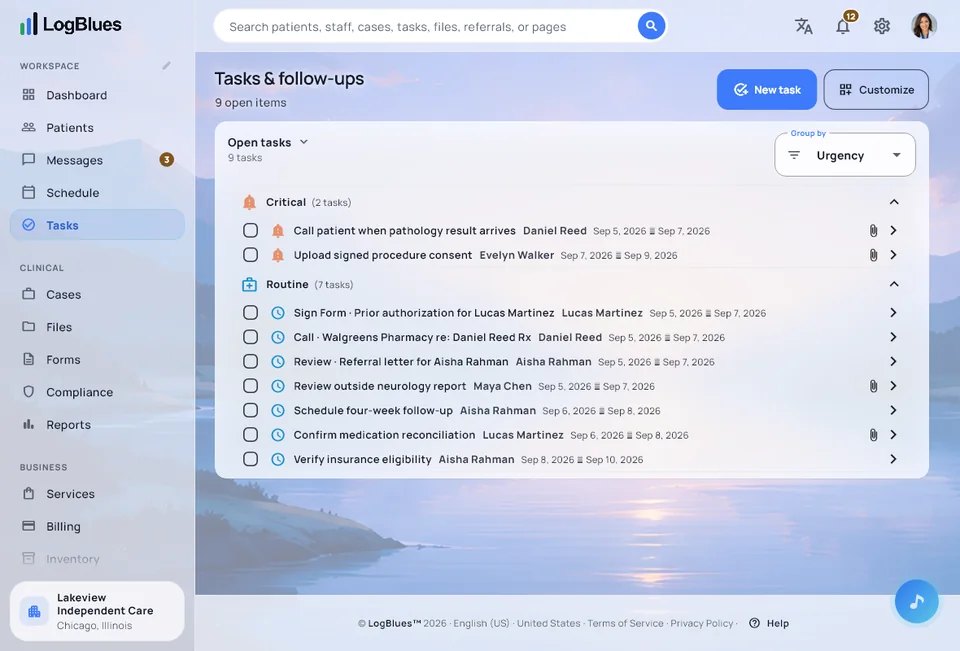
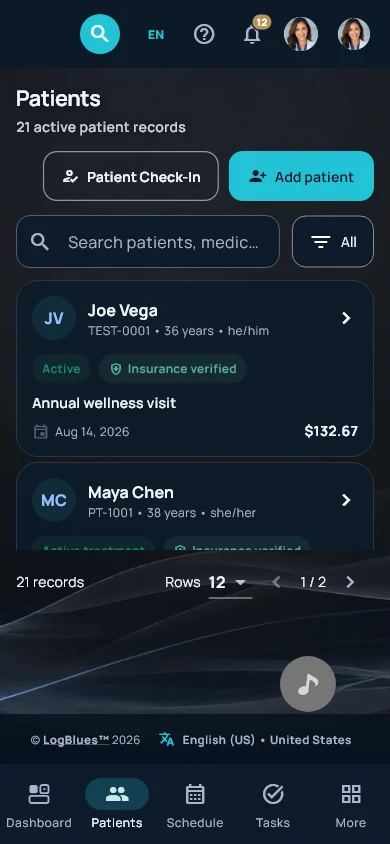
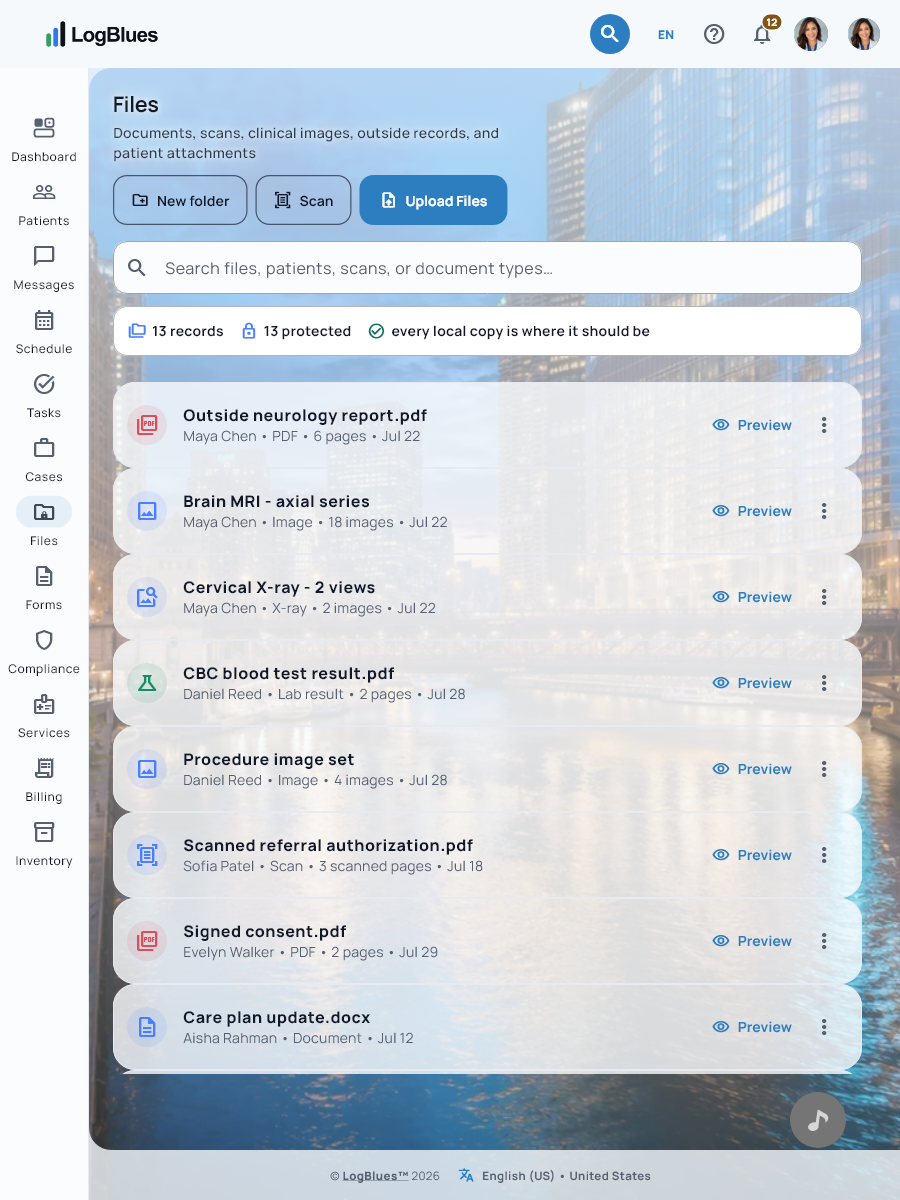
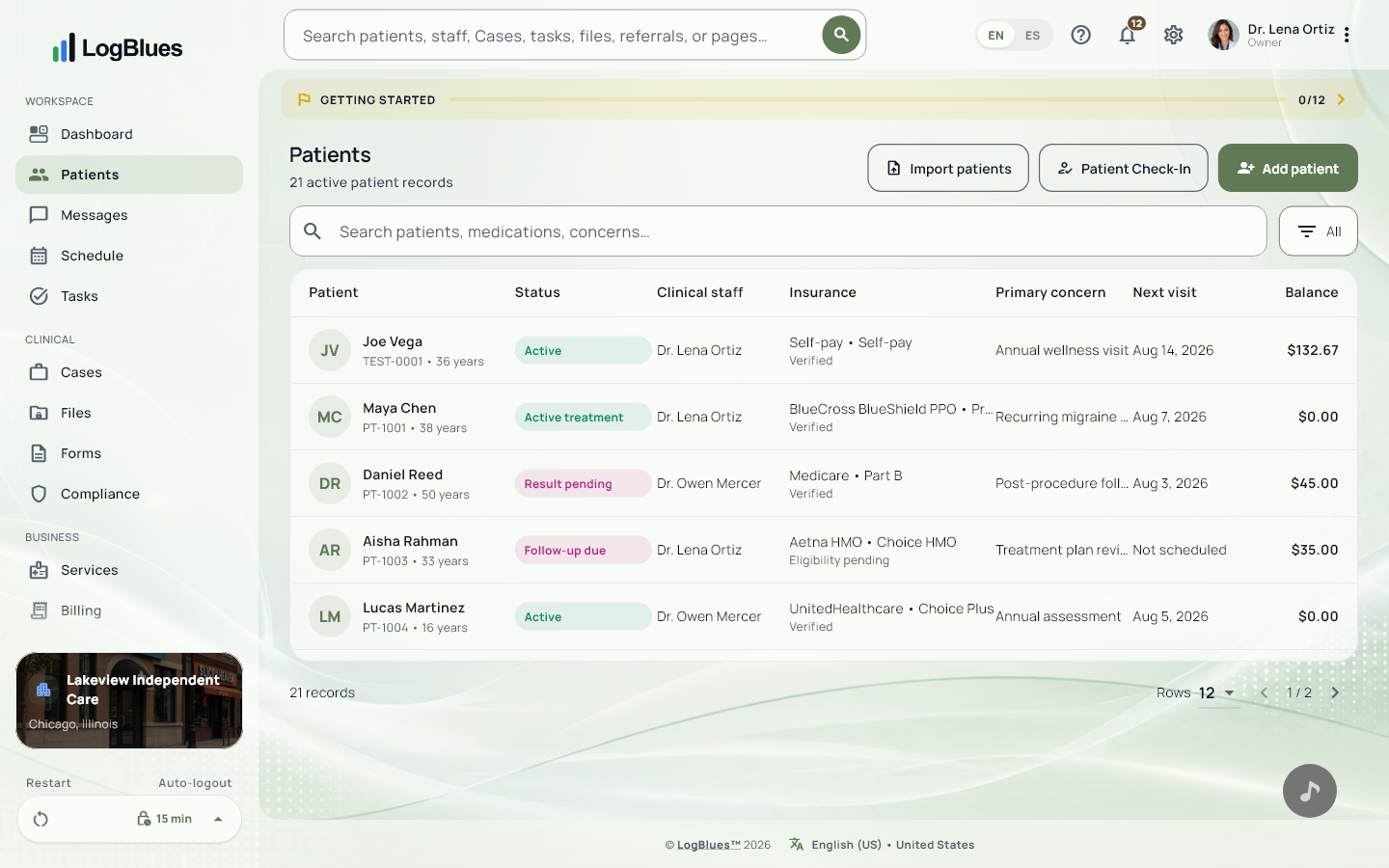
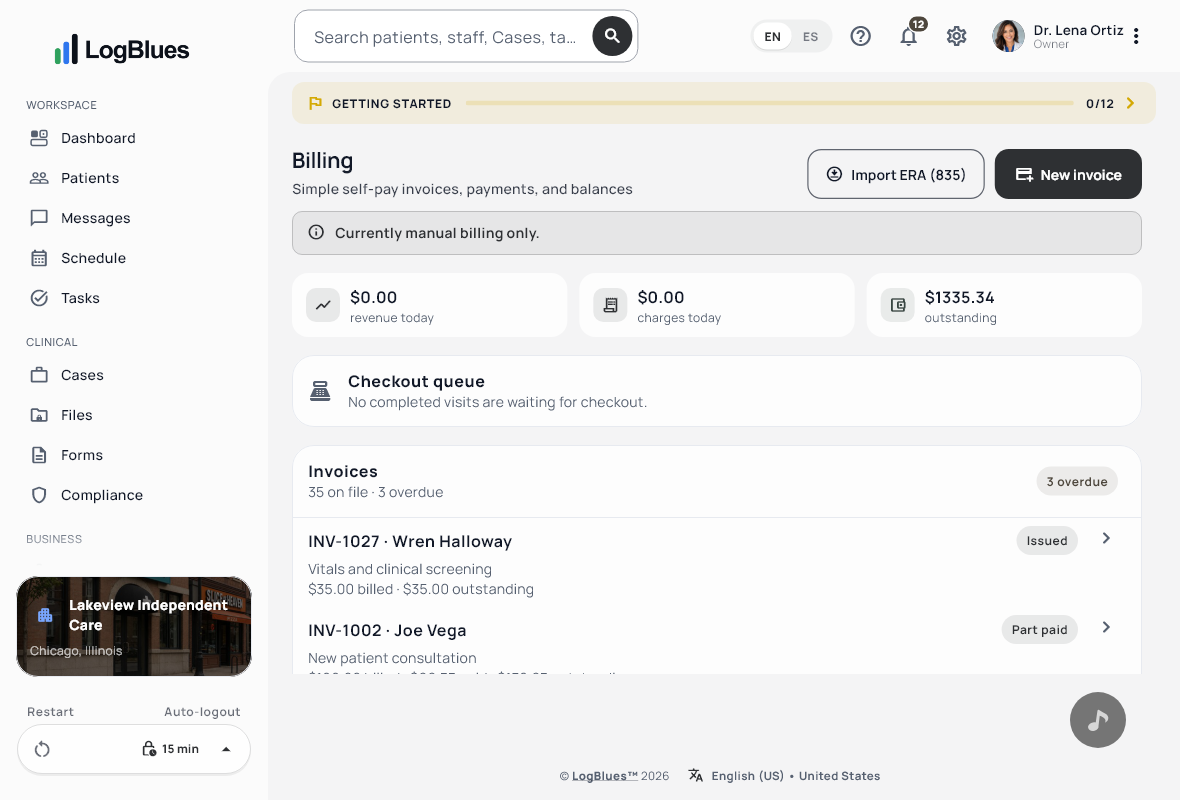
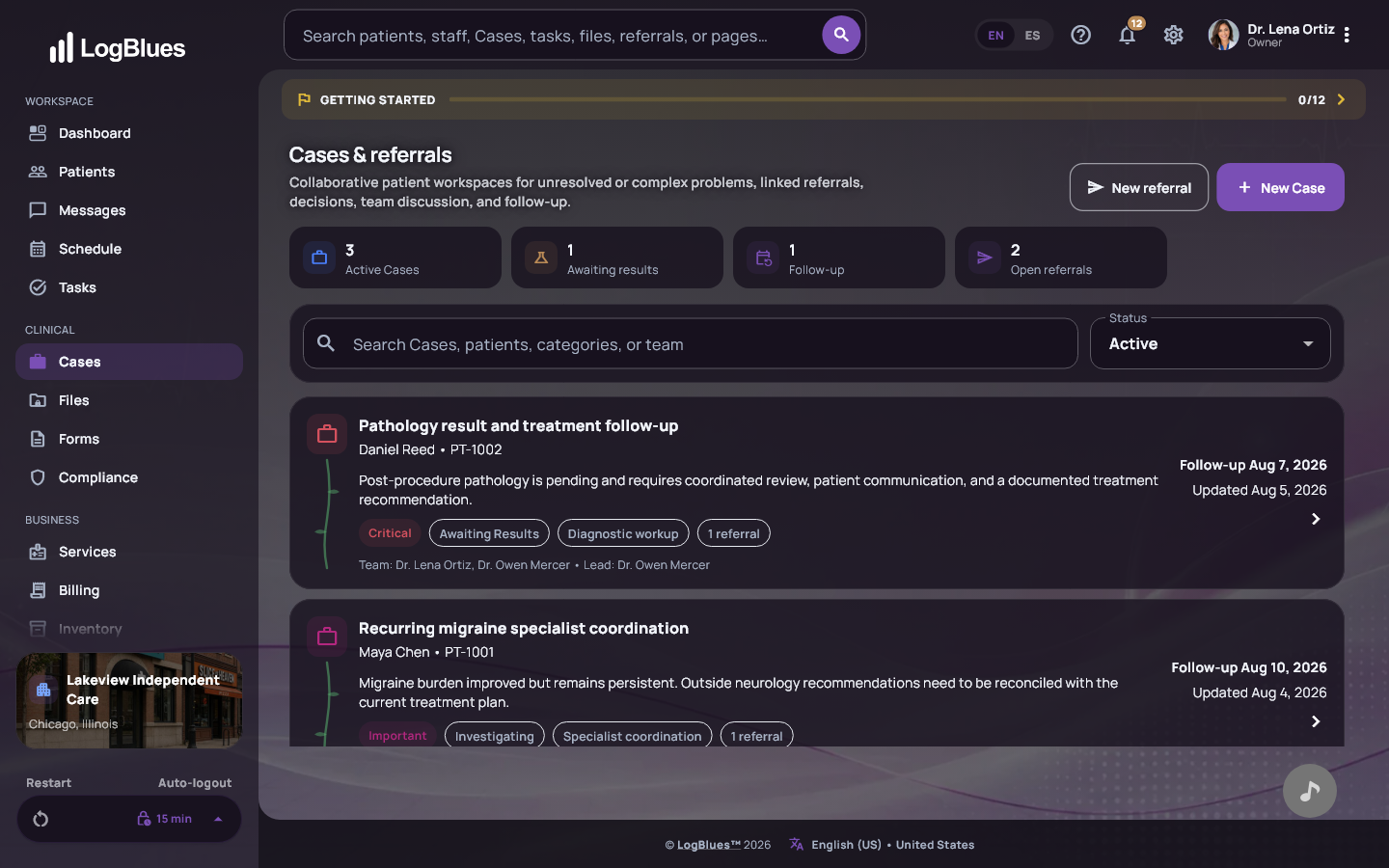
The same software at every size — a big monitor at the front desk, a laptop in the office, a phone in your pocket. Three different themes here; there are twenty-one.
Windows 10 and 11 Light & dark Twenty-one themes
Side by side
Reports, files, charts, billing, cases.
Five of the screens you would actually be in, each in a different theme. Not five products with five logins — one workspace, one record underneath all of them.
One login One record Works offline
Blues
The assistant is on your machine, not ours.
Ask it to find a patient, draft a note, pull up who is overdue, or set up a task. It answers from the records already on the computer in front of you, because the model is on that computer too.
Nothing you type is sent anywhere to get an answer. There is no per-message cost, because there is nothing being bought on your behalf. And it is on the $50 plan, not held back for the expensive one.
- It cannot change your records alone. Every action waits for your confirmation.
- It cannot see past your role. A front-desk login gets front-desk answers.
- It does not diagnose or prescribe. Clinical judgement stays yours.
- It says when it does not know. Rather than sounding sure.

Make it yours
It should feel like your practice, not our software.
Your specialty’s modules
Pick what your practice actually uses at setup, from dental to home health. Change it later without a migration.
Your letterhead
Forms, letters and invoices come out looking like they came from your clinic, because they did.
Twenty-one themes
Twenty-one themes, and every one of them comes with every plan. Light and dark, set per person — which sounds frivolous until you have looked at the same gray screen for nine hours.
See them all →English and Spanish, per person
The front desk can work in Spanish while the chart stays in English. A language only appears once the interface behind it is actually translated — which is why there are two rather than a list of twenty-eight with no screens behind them.
Secure messaging
Threads attached to the patient they are about, files that travel with them, and roles deciding who sees what. Clinical discussion stops happening in consumer chat apps because there is somewhere better.
Localization
Dates, times, numbers, units and clinical conventions follow the region you pick.
Security
Never a paid tier.
Encryption at rest, roles that decide what each person reaches, re-authentication before protected health information appears on screen, and an audit trail that cannot be edited after the fact. All of it on the cheapest plan.
We sign a Business Associate Agreement on request, free, on any plan. What we will not tell you is that installing software makes a practice compliant — it does not, and anyone selling you a checkbox for that is selling you something else.
How it is protected →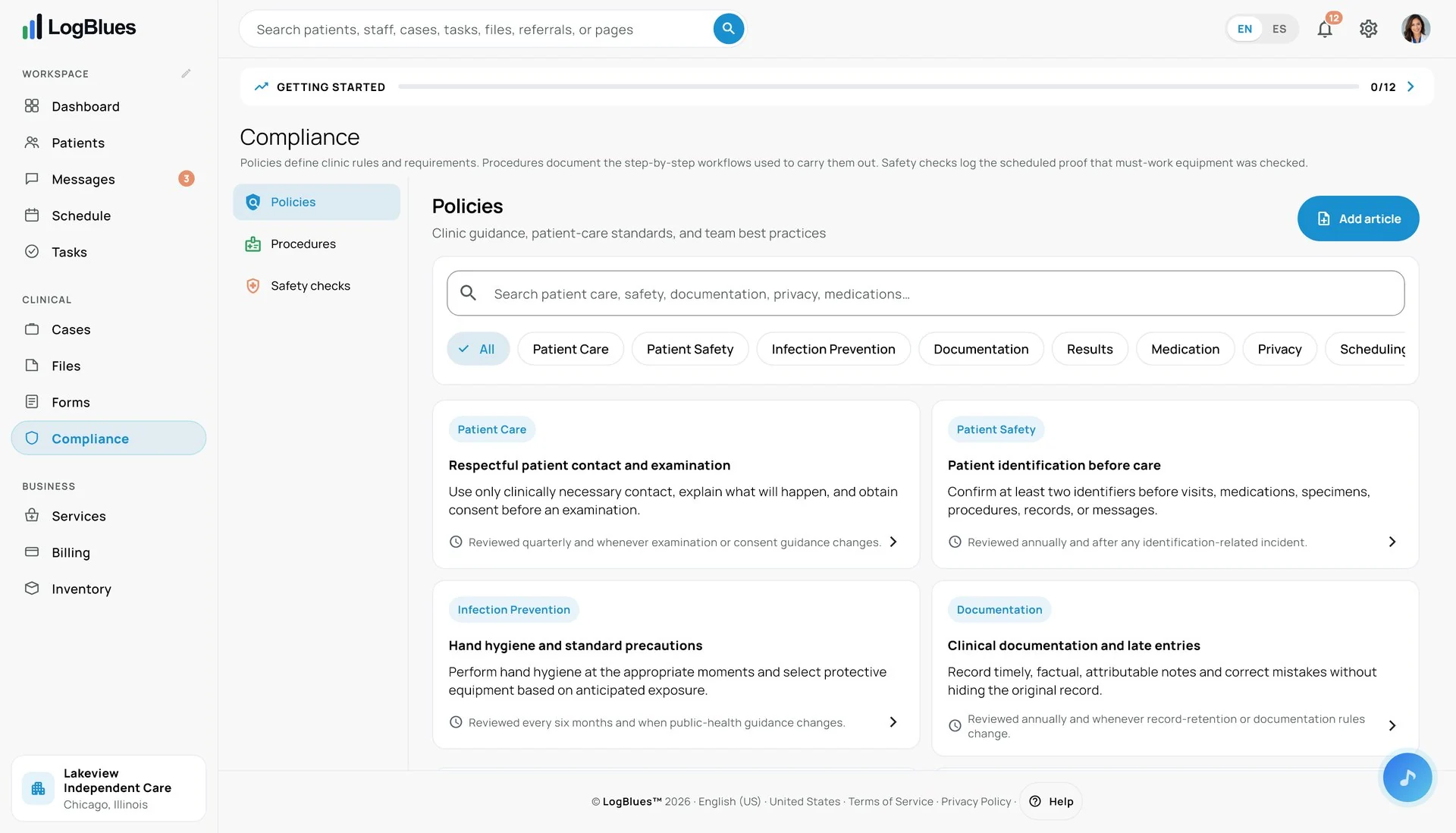
Try it
Two months, and no card.
Install it, put one real week of your schedule through it, and run a month-end before you decide anything. That tells you more than a demo call, and nobody has to sit through the demo call.
Start free See the plans →See LogBlues in action
A conversation about your practice.
Tell us what you would like to see. Our team will follow up by email to arrange a demo around your practice and answer your questions.
No download needed to request a demo. We will arrange a time with you.